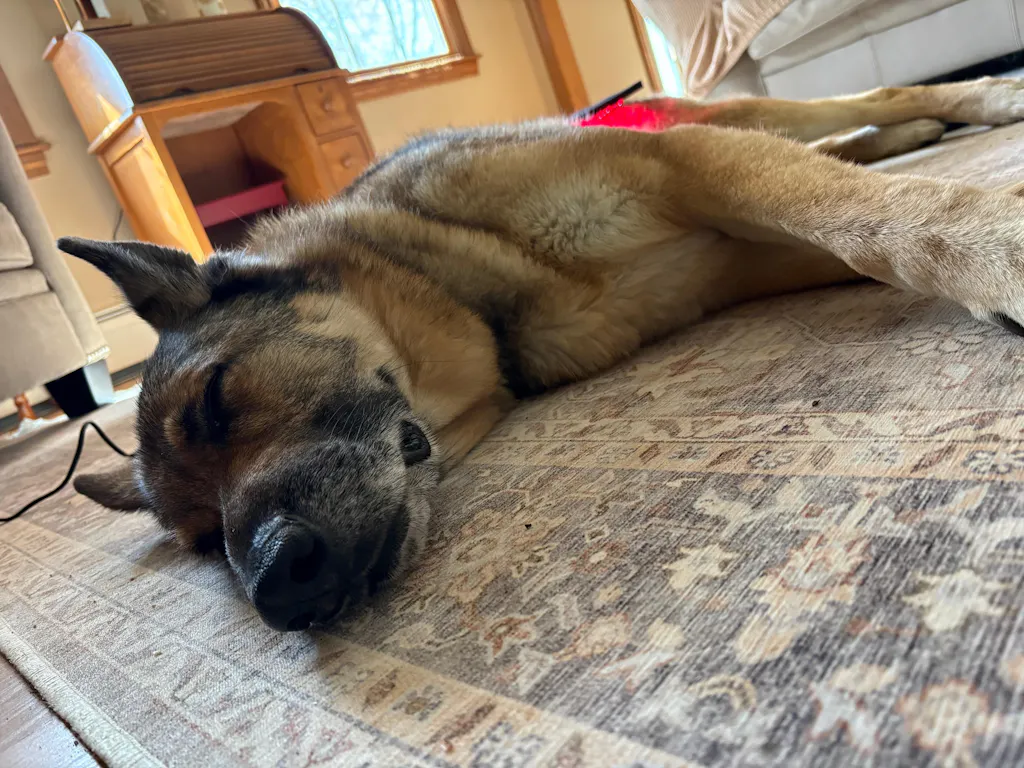
You’ve done your research. You’ve learned that red light therapy comes in a variety of different packages: as light therapy pads, handheld devices, and even professional therapy kits. If you’ve ever wondered how to use red light therapy on dogs, then you’ve come to the right place.
For more than 25 years, we’ve helped dog owners provide better care for their furry friends. Time and time again, we’re asked the same: How do I use red light therapy on my dog?
In this article, we’ll cover just that, in addition to the 5 W’s and 1 H (who, what, when, where, why, and how) of red light therapy, including:
-
What is red light therapy, and how does it work on dogs?
-
When should you use red light therapy for your dog?
-
How should you prepare a dog for red light therapy treatments?
-
Where should you apply red light therapy?
-
How long do sessions last, and how frequently should you administer red light therapy treatment?
-
What to do to keep your dog comfortable during treatment
-
How to maintain safety, track progress, and avoid mistakes
-
Why should you speak with a veterinarian and a light therapy specialist before using red light therapy?
What is red light therapy, and how does it work on dogs?
Red light therapy, or photobiomodulation (PBM) therapy, uses red and near-infrared light to help decrease inflammation and jumpstart healing for your pup. It works by activating the mitochondria, the powerhouses of the cell that break down food and convert it into usable energy, helping the body reduce inflammation and boost overall healing.
In scientific terms, light therapy activates cellular mitochondria, which boosts adenosine triphosphate (ATP), which facilitates cellular repair & functioning, which gives your dog a boost in energy & supports overall healing.
Dog red light therapy devices are built to deliver the right type, power, and light wavelengths — both 630 nanometers (nm) and 850 nm to be specific — to reach a dog’s skin and deep tissues. When light reaches the skin, it activates key body processes to help with the following:
-
Increasing blood flow
-
Reducing pain and inflammation
-
Promoting faster recovery
-
Supporting the growth and function of red blood vessels
To simplify, red light therapy works like a healer for your dog’s body. And healing is always good.
When pet owners typically use red light therapy for their dog
Most pet owners find dog red light therapy beneficial for a variety of dog-related health conditions, such as:
-
Arthritis
-
Joint pain, mobility, and health
-
Skin and coat health
-
Soft tissue injuries and surgical incision sites
-
Stiff or sore muscles
-
Inflammation reduction
-
Boosted energy
Pet owners don’t, and shouldn’t, apply red light therapy directly on malignant tumors, on active or open wounds, or on the uterus of pregnant dogs. Finally, we recommend consulting with a veterinarian before choosing red light therapy, especially for dogs experiencing epilepsy or using medication that makes them sensitive to red light therapy.
How to prepare a dog for a red light therapy session
If any of the above use cases resonate with you and your dog’s needs, you’ll want to make sure you know how to set up and prepare a red light therapy session for your dog. Here are a few tips to help you create a smooth, effective red light therapy session:
-
Choose a comfortable space where your dog can relax.
-
Ensure your dog is clean and dry
-
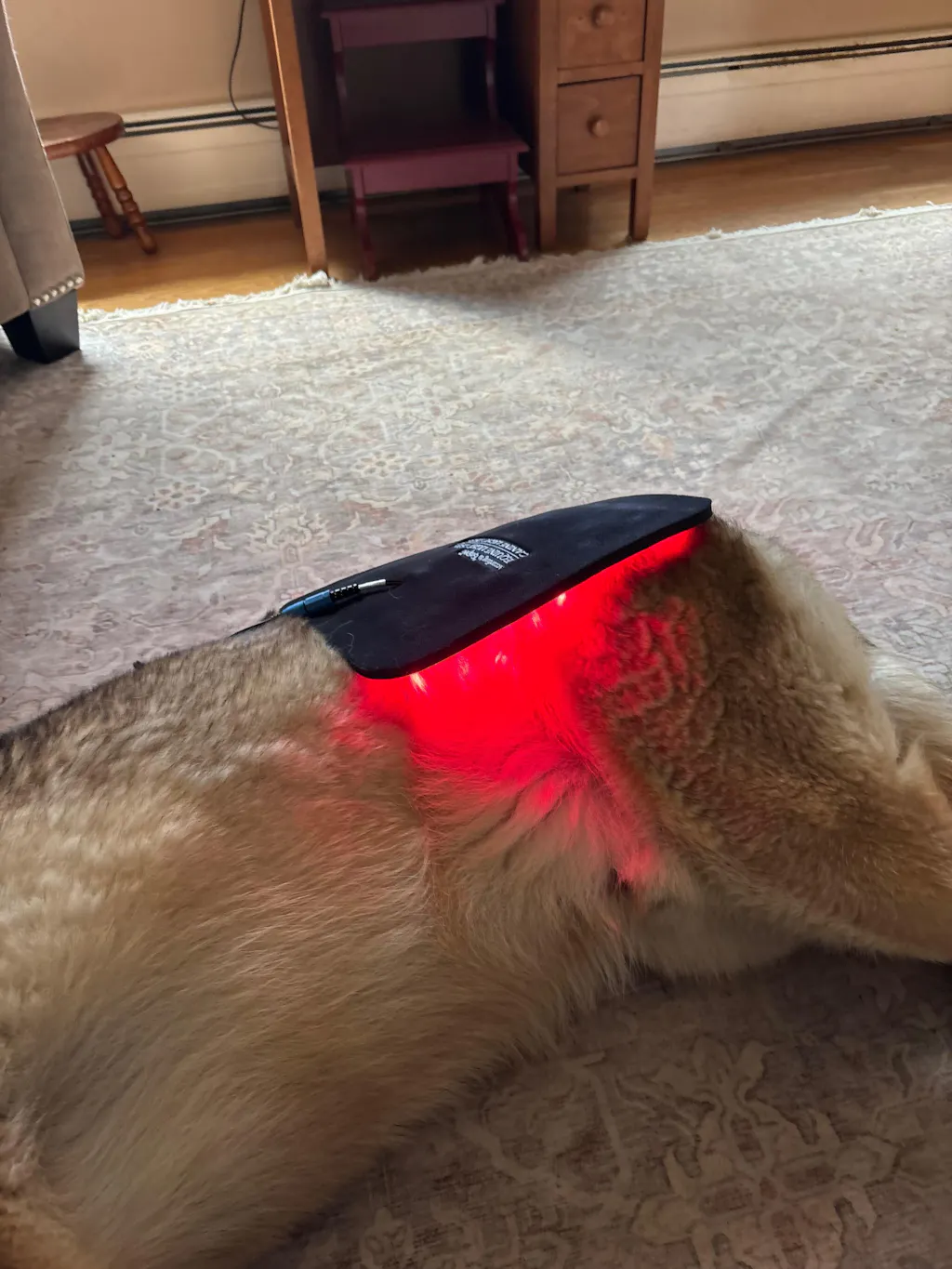
Lay the light pad on your dog before you plug it in.
-
Determine the right dosage for your dog
Where to apply red light therapy on the body
The great news is that red light therapy is safe to use virtually anywhere on your dog’s body. The most common areas of use include:
-
The skin
-
Joints, muscles, tendons, and injured areas that are prone to injury, strain, or general soreness
-
Spine and back, to help determine conditions like intervertebral disc disease (IVDD)
-
Skin surfaces, for hot spots, wounds, surgical incisions, and inflammation of the paws
A common question that we feel is worth noting and sharing with you is whether exposing a dog’s eyes to red light is safe. While red and near-infrared light tend to be less harmful than UV light, prolonged exposure to the retina in close range carries a risk.
Nevertheless, red light therapy can be used around the eye area, but just be mindful to limit direct exposure to the eyes where possible. It’s all about timing and exposure.
How long sessions may last and how often to use your device
Speaking of timing, to make the most of your dog’s red light therapy sessions, let’s take a look at the timing of each session. As a general rule of thumb, consistent use of red light therapy yields longer-lasting results.
If you’re looking for a treatment schedule, consider the following process:
-
If you and/or your dog are new to red light therapy, you may want to start with shortened sessions. “Listen” to your dog. Some will be comfortable for the whole treatment time, and more anxious dogs will decide when enough is enough.
-
As your dog will allow, increase the length of each session until you reach 15 minutes.
-
Depending on the severity of the issue being treated, you can treat two times per day or just several times per week.
-
Your dog may prefer shorter treatment cycles, and on other days, they may prefer longer cycles. The use of red light therapy at home should be consistent.
Staying consistent is the name of the game. Our clients who experienced the greatest success were those who were consistent and followed the manufacturer’s guidelines.
Tips for helping dogs stay calm and comfortable during treatment
Aside from consistency with each red light therapy session, a few ways to help your dog feel calm and comfortable before, during, and after treatment include:
-
Environment: Opt for a relaxing, quiet environment. Their favorite bed, room, or area of the house is a great option.
-
Reinforcement: Use treats, rubs, or gentle petting to encourage your dog to sit still during their therapy sessions.
-
Placement: Position your infrared light therapy device over the treatment area before you plug it in.
-
Safety and security: Ensure that the red light therapy is held loosely in place, use a towel elastic bandages, or velcro straps. Check the heat of the device, as it should feel warm but never hot.
The more you can create a safe and comfortable experience, the greater return on investment you and your dog will receive when using red light and laser therapy.
Basic safety guidelines for at-home use
A few points to make about safety tips with red light therapy devices.
-
Avoid overusing laser red light therapy devices: Over-treating a sensitive area can cause restlessness or mild skin irritation. Do your best to stick to the manufacturer’s recommended treatment schedule.
-
Protect sensitive areas: While the research is mixed on whether red light laser therapy is dangerous to a dog’s eyes, avoid shining the light directly over the eyes, tumors, reproductive organs, or sensitive areas, especially for pregnant dogs.
-
Stay consistent and keep calm: Treatment sessions are only as helpful as the consistency with which you make them. Between consistency and intensity of each session, choose consistency.
-
Consult a qualified veterinarian: Reaching out to your trusted veterinarian is one of the most effective ways to ensure you’re giving your pup the right light therapy treatment.
Common mistakes to avoid
One of the most commonly asked questions we receive is: What should I avoid? Avoiding the following mistakes can help you make sure that red light therapy is used to help your dog recover.
-
Tumors: Never use over a malignant tumor on any animal unless instructed by a qualified veterinarian.
-
Pregnant dogs: Don’t use your device on a pregnant dog’s abdominal area. There is no evidence that doing so causes harm, but it also hasn’t been proven harmless.
-
Avoid the eyes where possible: Prolonged use of the lights directly into the eye may cause problems.
-
Prescription drugs: Caution must be used if photosensitive drugs, such as, but not limited to, tetracycline, are being administered.
By checking in with a red light therapy specialist or qualified veterinarian, you and your pup can enjoy all the benefits of red light therapy.
How to track your dog’s progress over time
You’ll be able to tell that red light therapy for dogs at home is working if you notice slow, incremental progress over time. One of the best ways to do so is by administering therapy daily.
You should see results within about two to three weeks, if not sooner. Furthermore, you can track your dog’s progress by keeping a daily journal or using a Likert scale of 1-5 to measure your dog’s mobility.
Capturing photos and videos of your area of concern is also helpful. Furthermore, always monitor any changes in daily behavior, specifically energy levels, reduced stiffness, or mood changes.
When to stop and speak with a veterinarian
Red light therapy offers innumerable benefits, especially for dogs with hip osteoarthritis and chronic conditions like generalized arthritis and joint pain. Nevertheless, you should speak with a veterinarian and cease using red light pads or devices if any of the following scenarios pop up:
-
Stress: If your dog starts panting, pacing, or trying to leave the room, the treatment dose may be incorrect.
-
Irritation: If you notice rashes, burns, or redness on their skin, you should pause and speak with a veterinarian or consult your product’s usage manual.
-
Behavioral changes: If you notice a loss of appetite, increased sensitivity to stimuli, or unusual bouts of lethargy. Your dog may be experiencing issues not helped with light therapy, like hormonal imbalance, parasites, etc.
We always recommend working with a veterinarian to determine the right treatment option for your pet.
Choosing the right red light therapy device
In our opinion, handheld devices and red light therapy pads are some of the safest, most effective treatment options. Aside from being safe, research shows that red light therapy can help with a number of skin conditions and muscle-related issues as an adjunct therapy to traditional veterinary medicine.
Successful treatment depends on choosing a science-backed therapy device developed by engineers with decades of experience with photobiomodulation therapy. But don’t take our word for it.
Explore what red light therapy looks like live in our collection of educational videos about red light therapy.
And, if you have any questions or would like to know more about red light therapy, which devices to choose, or where to buy a red light therapy device of your own, don’t hesitate to contact us today. We’d be happy to be of service.
Until then, be well, and the best of healing to you and your furry friend.
“This pad worked miracles on my boy!” - Angela G.
“Pupdate! It’s been two months since I’ve started, “According to ‘Gospel’ Equine Light Therapy” on Buster’s torn CCL. After other treatments failed to provide ongoing healing and relief, I’m over-the-moon excited to say that this pad worked miracles on my boy!
He hasn’t regressed since starting therapy and continues to heal/get stronger every day. After nearly all hope was lost, light therapy at home made all the difference in the world.
Buster is well on his way to recovery, and dare I say, even runs sometimes!! 🐶❤️” - Angela G., satisfied red light therapy customer
Equine Light Therapy: Helping People Help Animals For More Than 25 Years